
Tennis Shoes vs Running Shoes: 5 Key Differences Explained
Once you step onto a tennis court or head out for a long run, the difference is important to understand. The difference between tennis shoes and running shoes is related to how your feet move, turn, stop, and feel supported.
If you want to know what the difference is, it's easy to see the difference between tennis shoes and running shoes. This information will help you choose the best pair for comfort, performance, and the health of your feet in the long run.
Tennis Shoes vs Running Shoes: Quick Comparison
|
Feature |
Tennis Shoes |
Running Shoes |
|
Primary Movement |
Side-to-side, quick stops, sharp turns |
Forward motion, steady pace |
|
Sole Design |
Flat, stable sole for court control |
Curved sole for heel-to-toe movement |
|
Cushioning |
Moderate and evenly distributed |
High cushioning for impact absorption |
|
Support |
Strong lateral and ankle support |
Minimal lateral support |
|
Grip & Traction |
Court-specific grip (hard, clay, indoor) |
Straight-line tread for roads or treadmills |
|
Durability |
Reinforced toe and sides for court drag |
Lighter build, less abrasion protection |
|
Best Use |
Tennis, pickleball, squash, court sports |
Road running, treadmill, long-distance runs |
Core Differences
1. Sole Design
Tennis Shoes: Tennis shoes have soles that are flatter and more stable, which makes it easier to move quickly from side to side on the court. They don't bend as much and give you more control when you stop or turn quickly.
Running shoes: These styles with curved soles are more flexible. Running shoes are designed to move smoothly from heel to toe during forward motion.
2. Cushioning & Impact Absorption
Tennis Shoes: Cushioning is moderate and evenly spread. They keep you stable during lateral movement.
Running Shoes: These focus heavily on shock absorption, especially in the heel and forefoot, to reduce stress during long runs.
3. Grip Patterns
Tennis Shoes: Grip patterns vary based on surface: hard, clay, or indoor court shoes vs running shoes. They ensure traction without slipping.
Running Shoes: They use straight-line tread patterns meant for roads or treadmills.
4. Weight & Ankle Support
Tennis Shoes: They are slightly heavier with reinforced sides and better ankle support for sharp movements.
Running Shoes: Lighter in weight, they prioritize speed and comfort over lateral stability.
5. Protection
Tennis Shoes: Extra toe guards and side reinforcements protect against court drag and fast direction changes.
Running Shoes: Protection is minimal, as running involves repetitive forward motion rather than abrasion.
Tennis Shoes: Specialized by Court Surface
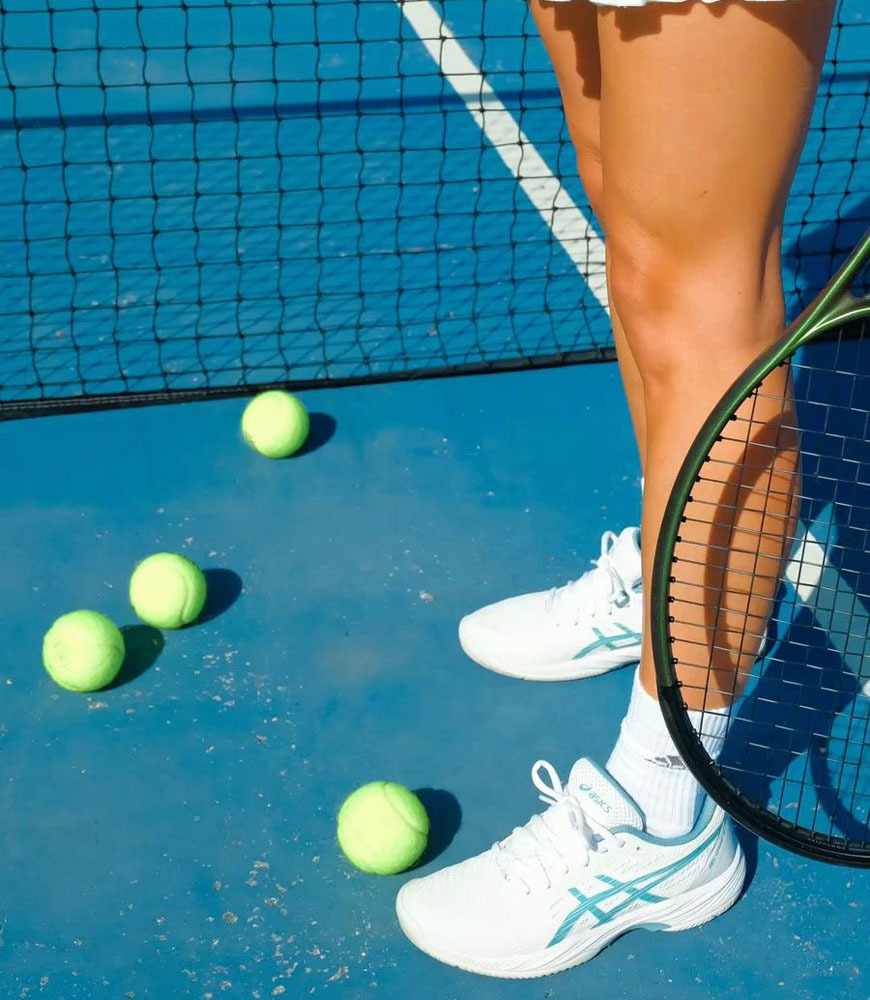
When comparing tennis shoes vs running shoes, one of the biggest differences is how tennis shoes are built around the court you play on. When compared with running shoes, tennis footwear is designed for quick lateral movement, grip, and durability. This is exactly how tennis shoes are different from running shoes.
1. Clay Court
Tennis shoes for the clay court feature a herringbone tread that provides controlled sliding and strong grip. They also prevent clay from getting trapped and keep the movement smooth during long rallies.
2. Hard Court
Built for durability, hard court shoes offer reinforced outsoles and extra cushioning to handle high-impact play on abrasive surfaces common in UAE tennis courts.
3. Grass Court
These court shoes have nubs or small pimples on the sole for better traction without damaging the court. They are lightweight and ideal for fast-paced play.
4. Multi-Surface Shoes
Multi-surface options are versatile and practical for recreational players. They work well if you switch courts often and want one reliable pair from the best tennis shoes range, including best men’s tennis shoes and best women’s tennis shoes available at TennisShop.ae.
Running Shoes: Engineered for Different Terrains
When comparing tennis shoes vs running shoes, it helps to understand what running shoes are actually built for. Running shoes focus on forward motion, shock absorption, and long-distance comfort. This core difference between tennis shoes and running shoes comes down to terrain, gait, and impact patterns.
1. Road Running Shoes
Designed for pavements and treadmills, these shoes offer lightweight cushioning and smooth heel-to-toe transitions. These are ideal for city runs and gym workouts.
2. Trail Running Shoes
Built for sand, gravel, and uneven paths, trail shoes have deeper traction and reinforced uppers for stability and protection outdoors.
3. Track & Field Shoes
These are performance-focused, lightweight shoes meant for speed training and short-distance runs on tracks.
4. Pronation-Specific Running Shoes
Created to support neutral, overpronated, or underpronated feet, they help improve alignment and reduce injury risk.
How to Choose the Right Shoes for Your Sport
When it comes to tennis shoes vs running shoes, the right choice depends less on style and more on how you move. They may look similar at first glance. However, the difference between tennis shoes and running shoes becomes obvious once you understand what each sport demands from your feet.
1. Choose Tennis Shoes If You…
If tennis is part of your weekly routine, tennis shoes are a must. The game involves constant side-to-side movement, quick stops, and sharp direction changes. That is why how tennis shoes are different from running shoes matters so much.
Tennis shoes are built with stronger lateral support and a more stable sole. You might play on hard courts, clay courts, or even indoor surfaces. They help keep your feet grounded and protected.
In the UAE, where outdoor courts are common, picking the best men's or women's tennis shoes can also mean that they will last longer in the heat. You can find a wide range of tennis shoes for women, men, and all skill levels at TennisShop.ae. You will also come across essential tennis equipment to complete your kit.
2. Choose Running Shoes If You…
Running shoes are designed for forward motion and long-distance comfort. If you are training on roads, treadmills, or tracks, they offer lightweight construction and extra cushioning to absorb impact. This is where tennis vs running shoes really differs.
Running shoes focus on shock absorption. They are ideal for daily runs, fitness training, or casual jogging, but not for court sports. Using them for tennis can lead to faster wear and less support, especially during quick movements.
Final Verdict: Tennis Shoes vs Running Shoes
Selecting the right pair of tennis shoes or running shoes can be a little hassle but will be worth it in the future. It is absolutely important to invest time and money in researching and buying the right shoes for tennis or running as it is an investment and the return comes in when you are playing on the court or running in a marathon. When you understand the differences between the tennis shoes and running shoes and how different they are when it comes to design, functionality and usage, you make no mistake in finding the perfect pair of tennis or running shoes that meet your needs.
FAQs:
1. What is the difference between tennis vs running shoes?
The difference between tennis shoes and running shoes lies in their design and functionality. Tennis shoes are designed for side to side movements and quick changes in direction. These tennis shoes provide stability and support. On the other hand, running shoes are made for forward motion with cushioning inside and shock absorption.
2. Can tennis shoes be used as running shoes?
Technically, you can run in tennis shoes. But they aren't the best choice for running every day. Tennis shoes are made for quick side-to-side movement and short, powerful movements, not for long, steady forward motion. They don't have as much cushioning and shock absorption as running shoes because their sole is flatter and their structure is more solid.
3. What are the best tennis shoes for beginners?
The best tennis shoes for beginners should provide you with good support, functionality, midsole cushioning and comfort. This will help prevent the risk of injury. So brands like Nike, Adidas and Asics give great options to players.
4. What is the difference between sneakers and tennis shoes?
The difference between sneakers and tennis shoes is that sneakers are a general term used for casual athletics shoes. Tennis shoes are specifically designed for the sport as they provide you with more support and stability on the tennis court.
5. What shoe features matter most for injury prevention?
The most important features are proper cushioning, strong lateral support, and a stable outsole. Good cushioning absorbs impact and protects your joints. At the same time, lateral support keeps your foot from rolling during quick movements. A well-gripped, durable sole also helps prevent slips and unnecessary strain, especially on court surfaces.
From Our Blog

Shanghai Masters 2026: Seeds, Start Date & Where to Watch

Paris Masters Tennis Guide: Schedule, Points & Payouts

Who Is Elena Rybakina? Rankings, Titles & Career Stats

Naomi Osaka: Grand Slam Titles, Ranking & Career Stats

Aryna Sabalenka: Career, Timeline, Stats & Playiing Style

Mirra Andreeva: Career, Ranking, Stats & Playing Style

Iga Swiatek ranking, stats, titles and records

Laver Cup 2026 Format and Schedule at The O2 London

2026 China Open tennis tournament dates, players, and history

How Coco Gauff rose to the top of women's tennis

Pickleball vs Tennis: What's the Difference Between the Two Sports
Pickleball Rules Guide For Beginners
Pickleball court dimensions and size guide

Who Has Won the Most Grand Slam Titles in Tennis?

Tennis Strings Guide: Everything You Need to Know
Tennis Scoring: System, Points, Games, Sets & Tie-Break

How to Improve Tennis Backhand Like a Pro: Tips & Technique

Cincinnati Open Tennis: Schedule, History & Guide

Alexander Zverev Career, Titles, Stats & Records

Who Is Novak Djokovic? Career Timeline, Titles, Stats & Records

Jannik Sinner 2026: Rankings, Stats & Latest News

US Open 2026: Schedule, Players, Venue, Scoring & Rules

Wimbledon 2026 Guide: Schedule, Players, & Rules

Serena Williams Wimbledon 2026 Comeback: Latest Update

Roland Garros 2026: French Open Overview & Predictions

Italian Open 2026: Overview, Predictions and Legacy

How to Become a Professional Tennis Player

Tennis Miami Open 2026: Overview, Winners, History & Facts

7 Steps to Master a Tennis Serve (Beginner’s Guide)

7 Tips to Choose the Best Padel Shoes | Complete Guide

Pickle Ball vs Padel: What’s the Difference in Rules and Play?

Dubai Duty Free Tennis Championships 2026: Complete Guide

Tennis Elbow Exercises & Prevention: Complete Player Guide

Guide to Mubadala Abu Dhabi Open 2026: Tickets & Info

Top Tennis Warm Up Exercises to Boost Performance

Six Kings Slam 2025: Sinner’s Win & Riyadh’s Tennis Rise

Australian Open 2026: Everything You Need to Know