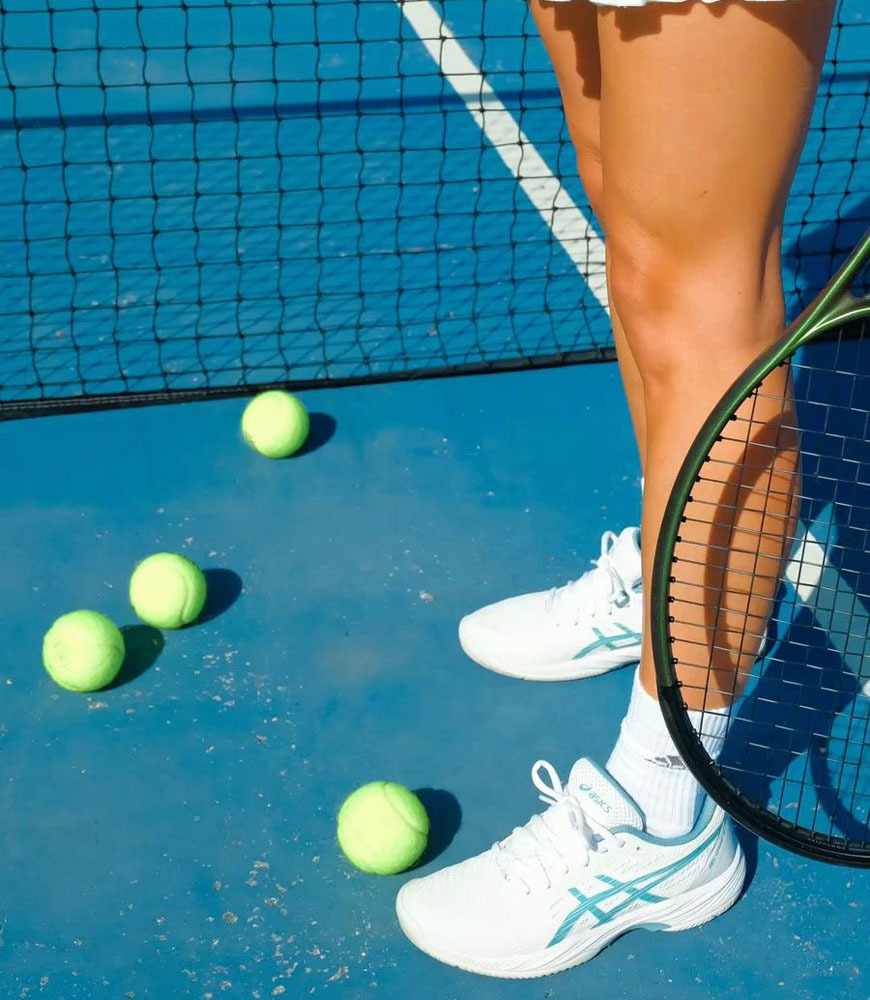

Roland Garros 2026: Tournament Legacy, Top Contenders & Predictions
Roland Garros 2026 arrives with the kind of tension only clay-court tennis can create. The tournament runs from 18 May to 7 June 2026, with the main draw listed from 24 May to 7 June, and it again brings the best players in the world to Paris for the season's most demanding Grand Slam test.
The French Open has always felt different. The rallies are longer. The margins are smaller. A player can look in control for two hours and still lose if their legs, patience, or shot tolerance breaks down late in the match. That is why Roland Garros 2026 feels so open, especially with Carlos Alcaraz, the defending men's champion, withdrawing because of a right wrist injury.
Clay does not forgive shortcuts. Your footwork, tennis shoes, tennis racket setup, strings, and stamina all get tested point after point.
The legacy and global prestige of Roland Garros
Roland Garros is one of tennis' four Grand Slam tournaments, but its identity is sharper than most. It is the only Grand Slam played on clay, which gives the French Open a playing style and rhythm that no other major can fully copy. The WTA notes that the women's singles event began in 1897, the tournament became a Grand Slam in 1925, and it has been played at Stade Roland Garros in Paris since 1928.
That history matters. The French Open is not just another stop in the tennis calendar. It sits between the hard-court start of the season and the grass-court swing, forcing players to reset their movement, point construction, and mental pace. A title in Paris usually says something deeper about a player's game. Power helps, but patience wins matches here.
Roland Garros tennis also carries a certain old-world feel. The red clay, the Paris crowd, the long afternoon battles, the sliding recoveries, the heavy topspin exchanges. Fans know they are watching tennis in its most physical form.
History of the French Open tennis tournament
The French Open grew from a national championship into one of the most watched tennis events in the world. Its move to Stade Roland Garros in 1928 gave the tournament its permanent home and its modern identity. The venue itself was named after Roland Garros, the French aviator, and over time the stadium became inseparable from the tournament's image.
Another major turning point came in 1968, when Roland Garros Open became the first Grand Slam tournament of the Open Era. That allowed amateurs and professionals to compete in the same field, changing tennis at the highest level.
That was no small shift.
Why Roland Garros is unique among Grand Slams
Clay changes everything. A fast serve loses some of its bite. Flat groundstrokes sit up more than they do on grass or hard courts. Defensive players get an extra step. Attackers must build points with more care.
At the French Open, players need balance and timing on every slide. They need spin to open the court, but they also need the courage to finish points when the chance appears. This is why some great hard-court players have struggled in Paris, while clay specialists have built entire legacies around Roland Garros.
The tournament also rewards players who can solve problems mid-match. Wind, heavy balls, damp clay, and shifting court speed can all change the feel of a match.
Evolution of Roland Garros over the years
Roland Garros has grown without losing its clay-court character. The stadium now covers 11.16 hectares from Porte d'Auteuil to Bois de Boulogne, and it hosts the only Grand Slam tournament played on clay.
The venue has also modernised for players, fans, broadcasters, and global audiences. Court Philippe-Chatrier remains the centrepiece, while the tournament's wider stadium experience now attracts both serious tennis followers and casual sports fans. For many viewers in the UAE, Roland Garros is a yearly reminder that tennis is not only about speed. It is also about craft.
Biggest storylines heading into Roland Garros 2026
The biggest men's storyline is obvious: Carlos Alcaraz is out. The Spaniard had been one of the strongest Roland Garros names of the last few seasons, but his right wrist injury has removed the defending champion from the French Open 2026 draw. That shifts the pressure towards Jannik Sinner, Alexander Zverev, Novak Djokovic, Casper Ruud, and the next group of challengers.
Sinner enters Paris with major momentum. He won the Italian Open by beating Casper Ruud 6-4, 6-4, and Reuters reported that the victory completed his set of all nine ATP Masters 1000 titles. Roland Garros is still the one Grand Slam missing from his collection.
On the WTA side, the field has its own pressure points. Coco Gauff is the defending champion. Aryna Sabalenka, Elena Rybakina, Iga Swiatek, Jasmine Paolini, Elina Svitolina, and Mirra Andreeva all enter the conversation for different reasons. The WTA confirmed that Gauff is one of four former Roland Garros winners on the 2026 main-draw entry list, along with Jelena Ostapenko, Iga Swiatek, and Barbora Krejcikova.
Injuries matter too. Clay is hard on the body. A small physical problem can become a major weakness once a match stretches past three hours.
Top ATP and WTA contenders for Roland Garros 2026
Roland Garros 2026 is not only about rankings. Clay form, match fitness, and tactical maturity all matter. The best contenders are the players who can defend deep, attack with margin, and recover well between rounds.
ATP favorites for the French Open title
Jannik Sinner is the leading name in any serious Roland Garros prediction for the men's draw. He has the ranking, recent form, and shot quality to control matches from the baseline. His backhand holds up under pressure, and his movement on clay has improved enough to make him a real French Open 2026 favorite.
Alexander Zverev also deserves close attention. ATP's entry-list report named him among the top contenders and noted his 2024 Roland Garros final run. His serve gives him cheap points, but his backhand and return game make him dangerous in long rallies too.
Novak Djokovic cannot be treated like an ordinary contender. Even when his week-to-week form is harder to read, his five-set experience gives him a different kind of value in Paris. If he reaches the second week fresh, the draw changes around him.
Casper Ruud remains one of the most natural clay-court players in the field. He has already made deep Roland Garros runs in the past, and his heavy forehand suits the surface. After losing to Sinner in Rome, he still looks like a player who can beat most opponents below the top line.
WTA stars dominating the clay season
Coco Gauff comes in as the defending French Open champion, and her game fits Paris well when her serve holds steady. She defends with speed, extends rallies, and can turn a defensive point into attack within one shot.
Iga Swiatek is always part of any French Open prediction. Her history in Paris gives her a built-in edge. The WTA notes that she is seeking to become the third woman in the Open Era to win Roland Garros five times, after Chris Evert and Stefanie Graf.
Aryna Sabalenka brings a different challenge. Her power can hit through clay when conditions are warm and dry, and she reached the Roland Garros final in 2025. Elena Rybakina has the serve and clean ball-striking to trouble anyone, though she still needs consistent physical sharpness across seven rounds.
Elina Svitolina has forced her way into the discussion as well. She beat Coco Gauff in the 2026 Italian Open final, and reports from Rome highlighted her wins over multiple top-five opponents during that run.
Dark horse players to watch at Roland Garros
Dark horses at the French Open 2026 usually fall into two types. Some are young players who arrive with fresh legs and no fear. Others are experienced clay-court names who know how to drag opponents into uncomfortable matches.
On the men's side, players such as Felix Auger-Aliassime, Ben Shelton, Alex de Minaur, Andrey Rublev, and Tommy Paul can trouble the draw if conditions suit them, though clay asks different questions of each player. Shelton's power can rush opponents, while de Minaur's speed can make him awkward over five sets.
On the women's side, Mirra Andreeva, Jasmine Paolini, Karolina Muchova, Zheng Qinwen, Linda Noskova, and Victoria Mboko are worth watching. The WTA entry list also points to several teenage direct entrants, including Andreeva, Iva Jovic, Mboko, Maya Joint, and Tereza Valentova.
A surprise run is never far away in Paris.
Crowd atmosphere and energy from Rome to Paris
Rome often gives fans a useful clay-court reading before Paris. The Italian Open has long rallies, loud crowds, and similar tactical questions, though Roland Garros brings heavier pressure because it is a Grand Slam.
Sinner's Rome title has changed the men's mood before Roland Garros 2026. Svitolina's Rome win has done something similar on the women's side. Paris will be different, but Rome has already shown which players can carry form through the final stretch of the clay season.
Roland Garros 2026 predictions and key matchups
A good Roland Garros prediction needs a little caution. Draw placement, weather, match length, and injury status can change everything. Still, current form points towards a men's event built around Sinner, Zverev, Djokovic, and Ruud, with Sinner clearly carrying the strongest momentum.
The women's draw feels less settled. Gauff is the defending champion, Swiatek has the Paris record, Sabalenka has the power, Rybakina has the serve, and Svitolina has the latest clay statement from Rome.
French Open prediction for the men's draw
The most sensible French Open prediction for the men's event is Sinner reaching the final. His timing, depth, and confidence make him the safest pick after Alcaraz's withdrawal. A Sinner vs Zverev final looks very possible if the draw keeps them apart.
Djokovic remains the player nobody wants early. Ruud also has a genuine path if he avoids Sinner until the later rounds. Still, based on 2026 clay momentum, Sinner looks like the men's title pick.
Key rivalries that could define the tournament
Sinner vs Djokovic would be the generational match. Sinner's clean baseline pace against Djokovic's return quality and problem-solving would make it one of the tournament's biggest tactical battles.
Sinner vs Zverev would be about control. Both can hold the baseline, both can absorb pace, and both can win long exchanges without rushing. Zverev's serve would need to be sharp.
Ruud vs any top seed could become a slow-burn clay battle. He may not always dominate headlines, but he knows how to build points on this surface.
WTA French Open prediction and tournament outlook
The WTA title race is tighter. Swiatek's Roland Garros record makes her hard to ignore, but Gauff is the defending champion and has already shown she can win the tournament. Sabalenka and Rybakina bring first-strike power, while Svitolina's Rome win makes her a real threat rather than a sentimental pick.
A Swiatek vs Gauff final would feel like the cleanest Paris storyline. If the draw allows it, that matchup would test Gauff's defence and serve against Swiatek's spin, court positioning, and clay-court rhythm. For now, Swiatek remains the narrow French Open prediction for the women's title, with Gauff and Svitolina close behind.
Why Roland Garros remains the ultimate clay-court test
Roland Garros stays special because clay exposes the full player. You cannot serve your way through seven rounds. You cannot survive on one big forehand. You need movement, endurance, emotional control, and a clear plan for different opponents.
The court also changes how tennis equipment performs. Clay-court tennis puts more value on grip, slide control, spin-friendly strings, and tennis shoes that can handle red clay movement. Even recreational players in Dubai and across the UAE notice the lesson: the right setup does not replace technique, but it can support better movement, cleaner contact, and more confidence on court.
That is why Roland Garros tennis still attracts players and fans who care about the details. The French Open rewards the complete competitor.
Conclusion
Roland Garros 2026 has the right mix of history, pressure, and uncertainty. The French Open will miss Carlos Alcaraz, but his absence opens the men's draw and gives Jannik Sinner a huge chance to complete his Grand Slam set.
The women's draw may be even more compelling. Coco Gauff returns as champion, Iga Swiatek brings proven Paris dominance, and Elina Svitolina arrives with a serious clay-court statement from Rome.
For fans, Roland Garros is more than a tournament to watch. It is a reminder of what clay-court tennis demands: patience, movement, spin, and nerve. For players inspired by the season, TennisShop.ae brings that same clay-court thinking into everyday gear choices, from tennis racket selection to tennis shoes, strings, grips, and match-ready accessories.
FAQs
1. When does Roland Garros 2026 start?
Roland Garros 2026 runs from 18 May to 7 June 2026. The main draw is listed from 24 May to 7 June 2026.
2. Why is the French Open called Roland Garros?
The French Open is called Roland Garros because it is played at Stade Roland Garros in Paris, a venue named after the French aviator Roland Garros.
3. Where is Roland Garros Stadium located?
Roland Garros Stadium is located in Paris, between Porte d'Auteuil and Bois de Boulogne. The stadium hosts the only Grand Slam played on clay.
4. How can fans buy Roland Garros tickets?
Fans should buy Roland Garros tickets only through the official Roland Garros ticketing platform or authorised hospitality partners. Availability, resale rules, and mobile ticketing instructions should be checked directly before purchase.
5. Who are the favorites to win Roland Garros 2026?
Jannik Sinner is the strongest men's favorite after his Italian Open title and Carlos Alcaraz's withdrawal. On the women's side, Iga Swiatek, Coco Gauff, Aryna Sabalenka, Elena Rybakina, and Elina Svitolina are leading contenders.
6. Why is the French Open played on clay courts?
The French Open has built its identity around clay. The surface slows the ball, creates longer rallies, and rewards players with strong movement, spin control, stamina, and tactical discipline.
From Our Blog

Who Is Elena Rybakina? Rankings, Titles & Career Stats

Naomi Osaka: Grand Slam Titles, Ranking & Career Stats

Aryna Sabalenka: Career, Timeline, Stats & Playiing Style

Mirra Andreeva: Career, Ranking, Stats & Playing Style

Iga Swiatek ranking, stats, titles and records

Laver Cup 2026 Format and Schedule at The O2 London

2026 China Open tennis tournament dates, players, and history

How Coco Gauff rose to the top of women's tennis

Pickleball vs Tennis: What's the Difference Between the Two Sports

Pickleball Rules Guide For Beginners

Pickleball court dimensions and size guide

Who Has Won the Most Grand Slam Titles in Tennis?

Tennis Strings Guide: Everything You Need to Know

Tennis Scoring: System, Points, Games, Sets & Tie-Break

How to Improve Tennis Backhand Like a Pro: Tips & Technique

Cincinnati Open Tennis: Schedule, History & Guide

Alexander Zverev Career, Titles, Stats & Records

Who Is Novak Djokovic? Career Timeline, Titles, Stats & Records

Jannik Sinner 2026: Rankings, Stats & Latest News

Carlos Alcaraz 2026: Ranking, Records & Grand Slam Outlook

US Open 2026: Schedule, Players, Venue, Scoring & Rules

Serena Williams Wimbledon 2026 Comeback: Latest Update

Roland Garros 2026: French Open Overview & Predictions

Italian Open 2026: Overview, Predictions and Legacy

How to Become a Professional Tennis Player

Tennis Miami Open 2026: Overview, Winners, History & Facts

7 Steps to Master a Tennis Serve (Beginner’s Guide)

7 Tips to Choose the Best Padel Shoes | Complete Guide

Pickle Ball vs Padel: What’s the Difference in Rules and Play?

Dubai Duty Free Tennis Championships 2026: Complete Guide

Tennis Elbow Exercises & Prevention: Complete Player Guide

Guide to Mubadala Abu Dhabi Open 2026: Tickets & Info

Top Tennis Warm Up Exercises to Boost Performance

Six Kings Slam 2025: Sinner’s Win & Riyadh’s Tennis Rise

Australian Open 2026: Everything You Need to Know

Top Longest Tennis Matches Ever Played in History