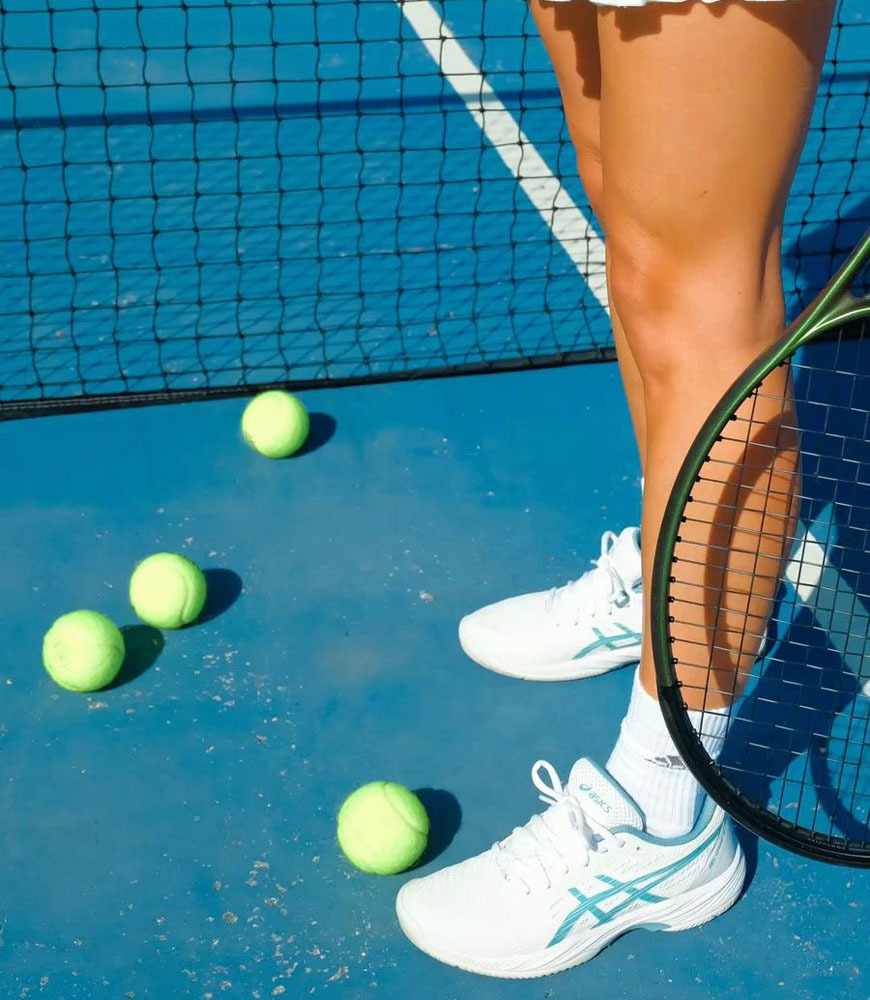

How to Do a Tennis Serve
A tennis match starts with one basic step: a tennis serve. When experienced players deliver a tennis serve, it appears to be a simple technique. However, it takes ample time and effort to learn a good serve. You also need a lot of coordination and practice to master this skill. You are expected to toss the ball, swing the racket properly, and strike the ball with focus.
It is possible for anyone to learn a solid serve by understanding the basic steps and practicing regularly. A reliable tennis serve starts at the point. However, you might end up giving the advantage beforehand. As a beginner, once you get familiar with the motion, serving is one of the most satisfying moments of playing tennis.
A Tennis Serve
Before you work on your technique, you need to know what a tennis serve really is. In tennis, the serve is the shot that starts each point. The server must hit the ball from behind the baseline and land it in the other team's service box on the other side of the net.
A good serve depends on several things working together. Your tennis serve grip, body balance, ball toss, and timing are all important. Many beginners focus only on hitting the ball hard. However, control and consistency are also significant when learning the game.
Another important part of serving is rhythm. A smooth motion helps players strike the ball at the right moment. When the motion becomes natural, players begin to add more power and spin.
Types of Tennis Serves
Flat Serve
This serve is the most straightforward type of serve. The player hits the ball with minimal spin to achieve speed and direct power. Because it travels quickly, it is used as a first serve.
For beginners, the flat serve is the easiest to understand because the racket moves directly through the ball. However, it also requires good timing.
Slice Serve
This tennis serve adds side spin to the ball. The racket brushes across the side. This creates a curved flight path.
The slice serve is useful because it pulls the opponent wide and creates angles on the court. Many players use it to move their opponent out of position.
Kick Serve
This tennis serve produces topspin. When you execute it correctly, the ball bounces high after hitting the court.
This serve is helpful as a second serve because the spin helps keep the ball inside the service box. It requires more practice than the flat serve. However, it provides extra control and safety.
Equipment You Need Before Learning to Serve
Tennis Racket
You need a tennis racket as the first piece of equipment when you want to play the game. If you are playing as a beginner, you should choose the equipment that is comfortable in your hand. When you use a balanced racket, it can help generate more power.
When players are starting to play tennis, overall control is important. You can choose a racket that is stable during the swing. It will help you focus on the training. Most rackets for beginners are designed with larger heads and lighter frames.
You can go through the extensive range of TennisShip.ae rackets to enhance your playing level. Our racquet range features models for beginners and regular players.
Tennis Balls
You also need to choose the right tennis balls for your game. You can have fresh balls to create a constant bounce. It also helps in understanding the height of the toss and the swing timing. If the balls lose pressure, they will bounce lower.
When you are learning to serve, it helps to keep several balls nearby. This technique helps with repeated motion. With continuous practice, you can develop a proper rhythm for the game.
Many players prefer to start with standard pressure balls because they behave exactly like the balls used in matches. When you use the same type of ball in a real game, it will help you with accurate timing.
Tennis Shoes
Footwork plays a big role in maintaining balance and generating power. Proper tennis shoes are designed specifically for the movement patterns used in tennis. They give you better grip and support when you move sideways or change weight quickly.
When serving, players move their weight from their back foot to their front foot and reach up for the ball. When you do this, shoes with the right traction help you stay stable. This makes it less likely that you will slip and lets your body move naturally during the serve.
It's also important to be comfortable. Players can stay calm during practice sessions if they wear the right tennis shoes. Beginners can fully concentrate on improving their technique if they have good support underfoot.
How to Do a Proper Tennis Serve
1. Correct Grip
You should use the continental grip for the best results. It is capable of holding the racket firmly.
This grip helps players to generate power and spin. It also supports proper wrist movement during the swing.
2. Proper Stance
The right tennis serve stance features your feet situated behind the baseline. Players also place the front foot that points toward the net post. The back foot should remain parallel to the baseline.
This stance helps create balance and prepares the body for the upward motion needed during the serve.
3. Ball Toss
An important part of the tennis serve is the ball tossing. You should toss the ball slightly in front of your body to help with a full swing.
A consistent toss leads to consistent serves. Many beginners find this step quite difficult. Therefore, it is essential to practice the toss properly.
4. Backswing
When you raise the ball for a tennis serve, the racket should be moved into a backswing. Your elbows should bend at the same time. This position is the racquet drop.
This movement stores energy that will be released during the upward swing.
5. Contact Point
The proper contact point takes place when the arm is fully extended. The body should also reach upward toward the ball. When you strike the ball at the highest possible point, it creates power and control.
6. Follow Through
Once you have made contact, the racket will continue its motion on your body. This follow-through step will maintain your overall balance. It also helps in reducing strain on your arms.
7. Regular Practice
Your tennis serve will improve when you practice regularly. You can practice for some minutes during every game session to build overall confidence.
Mistakes That People Make When Serving in Tennis
It's normal for beginners to make mistakes when they first learn how to serve in tennis. When you serve, you have to do a lot of things at once, like positioning your feet, tossing the ball, swinging the racket, and timing. Because of this, a lot of new players have the same problems when they first start practicing.
One of the most common mistakes is throwing the ball too far behind your body. It's hard to swing naturally toward the court when the ball toss goes behind the player. To get to the ball, players usually lean back. This reduces balance and control. Ideally, the ball should be tossed slightly in front of the body so the player can move upward and forward into the shot.
Another frequent problem is gripping the tennis racket too tightly. Beginners do this because they want more control. However, a tight grip actually makes the serve harder. When the hand becomes tense, the wrist cannot move freely. Moreover, the swing loses both speed and smoothness. Holding the racket with a relaxed grip helps the arm move naturally and helps create better power.
Rushing the motion is another mistake many players make. Some beginners try to swing the racket quickly after they throw the ball. For a good serve, you need to have good timing and coordination. From the stance to the follow-through, the motion should feel smooth.
A lot of players also forget about how to keep their bodies in balance. The serve can become unstable if the player doesn't put their feet in the right place or shifts their weight too soon.
Beginner Drills to Improve Your Serve
Drills can make learning the serve easier and more enjoyable.
One simple drill focuses only on the ball toss. Stand at the baseline and practice tossing the ball to the same spot repeatedly without hitting it. This improves consistency.
Another drill involves serving from a closer distance inside the court. This reduces pressure and allows beginners to focus on technique.
Ways to make your serve more powerful and accurate
As beginners get better at serving, they naturally want to hit harder and more accurately.
The whole body gives you power. Using your legs and shifting your weight forward during the swing gives the shot more power.
Repetition and focus help you get better at being accurate. Players get better control when they aim for specific targets in the service box.
Many players also find that relaxing the arm produces smoother and faster swings.
How Long Does It Take to Learn a Good Serve?
Learning a reliable serve takes patience. Some beginners begin landing consistent serves within a few weeks of practice. For others, it may take several months to develop comfort and rhythm.
The timeline depends on how often you practice and how focused your sessions are. Short, regular practice sessions usually lead to faster improvement than occasional long sessions.
FAQ
What are the seven steps to serving in tennis?
The main steps are to use the right grip, get into the right stance, throw the ball, do the backswing, hit the ball, follow through, and practice regularly to get the rhythm down.
What are the four kinds of tennis serves?
The flat serve, slice serve, kick serve, and underhand serve are the four most common serves. Each type uses a different mix of spin and power.
What are the five R's in tennis?
Rhythm, relaxation, rotation, reach, and recovery are the five R's that people often talk about. These rules help players keep their strokes and serves smooth.
Should you jump when you serve?
Many players leave the ground a little bit during the serve because their bodies move up. But beginners should first work on their timing and balance.
From Our Blog

Aryna Sabalenka: Career, Timeline, Stats & Playiing Style

Mirra Andreeva: Career, Ranking, Stats & Playing Style

Iga Swiatek ranking, stats, titles and records

Laver Cup 2026 Format and Schedule at The O2 London

2026 China Open tennis tournament dates, players, and history

How Coco Gauff rose to the top of women's tennis

Pickleball vs Tennis: What's the Difference Between the Two Sports
Pickleball Rules Guide For Beginners
Pickleball court dimensions and size guide

Who Has Won the Most Grand Slam Titles in Tennis?
Tennis Strings Guide: Everything You Need to Know
Tennis Scoring: System, Points, Games, Sets & Tie-Break
How to Improve Tennis Backhand Like a Pro: Tips & Technique

Cincinnati Open Tennis: Schedule, History & Guide

Alexander Zverev Career, Titles, Stats & Records

Who Is Novak Djokovic? Career Timeline, Titles, Stats & Records

Jannik Sinner 2026: Rankings, Stats & Latest News

Carlos Alcaraz 2026: Ranking, Records & Grand Slam Outlook

US Open 2026: Schedule, Players, Venue, Scoring & Rules

Wimbledon 2026 Guide: Schedule, Players, & Rules

Serena Williams Wimbledon 2026 Comeback: Latest Update

Roland Garros 2026: French Open Overview & Predictions

Italian Open 2026: Overview, Predictions and Legacy

How to Become a Professional Tennis Player

Tennis Miami Open 2026: Overview, Winners, History & Facts
7 Steps to Master a Tennis Serve (Beginner’s Guide)

7 Tips to Choose the Best Padel Shoes | Complete Guide

Pickle Ball vs Padel: What’s the Difference in Rules and Play?

Dubai Duty Free Tennis Championships 2026: Complete Guide

Tennis Elbow Exercises & Prevention: Complete Player Guide

Guide to Mubadala Abu Dhabi Open 2026: Tickets & Info

Top Tennis Warm Up Exercises to Boost Performance

Six Kings Slam 2025: Sinner’s Win & Riyadh’s Tennis Rise

Australian Open 2026: Everything You Need to Know

Top Longest Tennis Matches Ever Played in History

Top 10 Tips for Playing Padel Like a Pro | TennisShop.ae

Roger Federer Net Worth in 2025: The Billionaire of Tennis