
How to Improve Tennis Backhand Like a Pro
A strong tennis backhand can change the way you play. It helps you stay in rallies, defend under pressure, redirect pace, and stop opponents from attacking your weaker side again and again.
Many players spend months trying to add speed to their serve or forehand, but the backhand often decides how calm they feel during real points. Once you learn how to improve tennis backhand technique, your game starts to feel more balanced. You return better. You recover faster. You stop hoping the ball comes to your forehand every time.
Your backhand should not feel like survival. It should feel like a shot you trust.
Basics of a tennis backhand
A tennis backhand is the shot played on the non-dominant side of your body. For a right-handed player, that means the left side. For a left-handed player, it means the right side. It is used during baseline rallies, returns of serve, passing shots, defensive slices, and cross-court exchanges.
The phrase back hand tennis is sometimes searched by beginners, but the correct term is tennis backhand. Either way, the idea is simple: you are hitting the ball across your body instead of on your dominant forehand side.
There are two main styles. The two-handed backhand is played with both hands on the racket and gives many players more stability, especially when they are learning. The one-handed backhand is done with only the dominant hand and allows for more reach, but requires cleaner timing, better shoulder control, and a stronger preparation.
For most beginners, a two-handed backhand is easier to control. It helps keep the racket face stable and makes it simpler to handle fast or high-bouncing balls. A one-handed backhand can be beautiful when done well, but it punishes late contact. No hiding there.
The right choice depends on your body, playing style, coaching, and comfort. The goal is not to copy a professional exactly. The goal is to build a tennis backhand that repeats under pressure.
Tennis backhand technique
Good tennis backhand technique starts before the ball reaches your side of the court. Late preparation is one of the fastest ways to lose control. As soon as you read the ball coming to your backhand side, turn your shoulders, move your feet, and set the racket early.
Start from an athletic ready position. Keep your knees slightly bent, your weight on the balls of your feet, and your racket in front. When the ball comes to your backhand, turn sideways, bring the racket back, move into position, and make contact in front of your body. The ball should ideally be struck between knee and waist height, not too close to your chest and not behind your hip.
Small details matter here. A loose grip helps the racket move. A rushed swing tightens everything. If the racket face points too far up, the ball floats. If it closes too much, the shot drops into the net.
Correct grip for a tennis backhand
For a two-handed tennis backhand, the dominant hand usually sits at the bottom of the handle, while the non-dominant hand sits above it. Many players use a continental-style position with the lower hand and an eastern forehand-like position with the top hand. This gives the stroke support and helps the non-dominant arm guide the racket through contact.
For a one-handed backhand, many players use an eastern backhand grip. This grip makes it easier to drive through the ball and create topspin when the timing is right.
Do not squeeze the grip too hard. A tight hand blocks racket speed and makes the swing feel heavy. Think firm enough to control the racket, relaxed enough to swing freely.
Proper backhand stance and footwork
Your backhand feels controlled or rushed because of your footwork. You have to get there early enough to get into a good position to hit. That means being first, putting your feet down and not reaching at the last second.
A neutral stance works well for many backhands, especially when you have time. Your body turns sideways, your front foot steps toward the ball, and your weight moves through the shot. In faster rallies, you may hit from a semi-open stance, but the same rule applies: stay balanced.
Watch your spacing. If the ball gets too close, your elbows jam and the swing shortens. If you stand too far away, you reach and lose control. Good back hand tennis technique often starts with one simple habit: take one extra adjustment step before the bounce.
Swing path and contact point basics
The best contact point is slightly in front of your body. This lets your body weight move into the shot and gives your racket face time to stay stable through the ball.
For a flatter backhand, swing more through the line of the shot. For topspin, let the racket drop slightly below the ball and brush upward through contact. The upward path helps the ball clear the net and dip back into the court.
Do not overhit early. Beginners often think power comes from swinging harder. It does not. Power comes from timing, body rotation, clean contact, and racket speed working together.
Importance of follow-through in backhand shots
A common error is to stop the racket at contact. That usually results in short, weak, or mistimed shots. A good follow-through helps the ball to go with better spin, depth and direction.
The racket is generally finished high around the opposite shoulder with a two-handed backhand. The non-dominant elbow may point forward after the swing. For a one-handed backhand, the chest opens and the hitting arm extends through the ball before finishing naturally.
Finish the shot. Then recover.
How to improve tennis backhand consistency
If you want to know how to improve tennis backhand consistency, start with control before power. Your first target should be five clean backhands in a row. Then ten. Then cross-court. Then down the line. Build the shot in layers.
Consistency comes from repetition, but not lazy repetition. Each shot should have a purpose. Check your preparation, contact point, balance, and recovery. If one of those breaks, the shot usually breaks too.
A reliable tennis backhand is built by repeating the same shape until your body stops guessing.
Drills to improve backhand accuracy
Start with a simple cross-court rally drill. Stand behind the baseline and hit only cross-court backhands with a partner or coach. Aim for height over the net and depth past the service line. Do not go for winners.
Next, try a two-target drill. Place one target deep cross-court and another down the line. Hit five balls cross-court, then five down the line. This teaches direction control without changing the full stroke.
If you are practising alone, use a ball machine or wall. Against a wall, keep the swing short at first. Focus on clean contact and quick recovery. The wall does not wait for you, which is useful.
Improving timing and ball contact
Timing improves when preparation happens early. Turn your shoulders as soon as you recognise the backhand. Do not wait until the ball bounces.
A good cue is to track the ball with your front shoulder during preparation. This helps your body turn naturally and stops you from opening too early. If you open too soon, the racket often cuts across the ball and sends it wide.
Keep your eyes on the contact zone. Not forever. Just long enough.
Building confidence during long rallies
Long rallies test the mind. Many players panic on the fourth or fifth backhand and try to escape the rally with a risky shot. That is usually when the error comes.
Give yourself a rally rule. For example, play your first three backhands with height and margin before trying to change direction. This small rule lowers pressure and gives your body time to settle.
Confidence grows when your backhand survives normal rally speed. You don't need to hit a winner from every ball.
How footwork improves backhand consistency
Better footwork gives you a better contact point. Better contact gives you cleaner shots. That is the chain.
Practise split-stepping as your opponent makes contact. Then move with short, quick adjustment steps. Avoid planting too early, especially when the ball is still moving toward you.
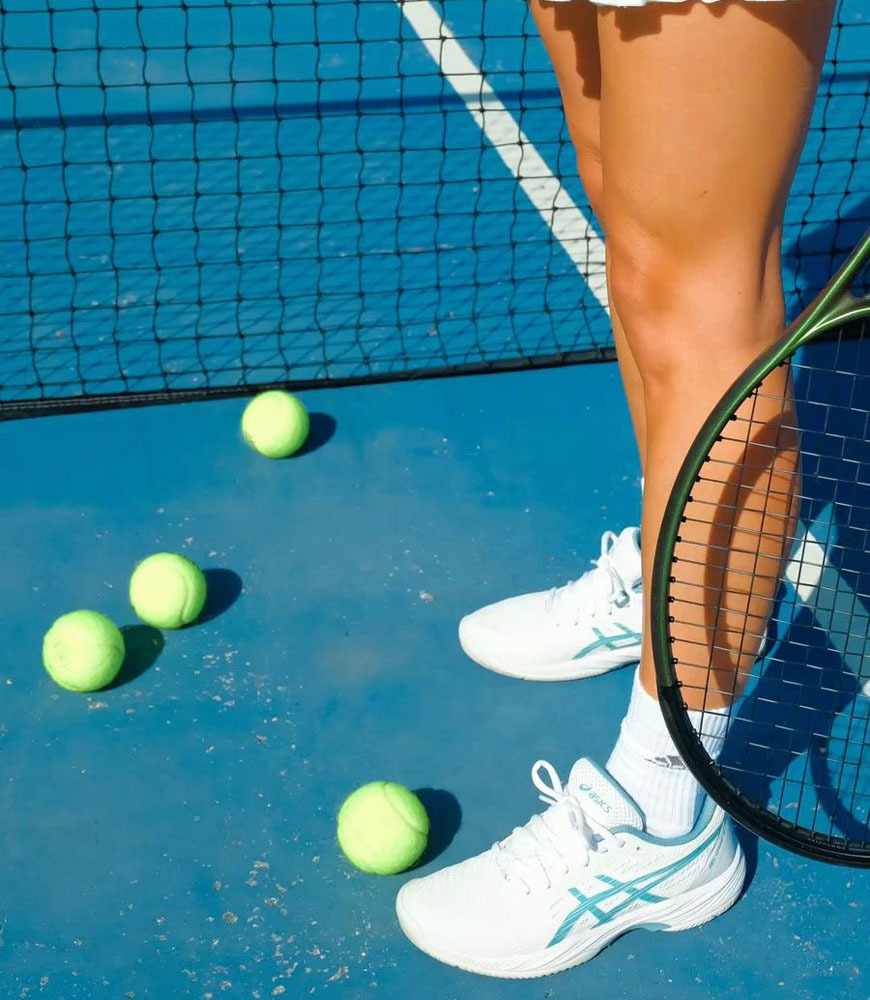
Tennis shoes also matter. On hard courts, you need support for side-to-side movement. On clay or sandy courts, grip and slide control become more important. A shoe made for tennis gives the foot more court-specific support than a running shoe.
How to add more power and spin to your backhand
Power does not start in the wrist. It starts from the ground, moves through the legs, hips, shoulders, arms, and finally into the racket. If your backhand feels weak, check whether your lower body is involved.
Bend your knees slightly as you prepare. Turn your shoulders. Let the racket drop below the ball for topspin. Then rotate through contact while keeping the head still. When the body and racket move together, the shot gains depth without feeling forced.
For topspin, brush from low to high. The racket should travel upward through the ball, not slap straight across it. For a slice backhand, the racket travels more from high to low with a controlled, cutting action. Slice can be good for defense, changing pace or keeping the ball down.
Racket setup might help too. A well weighted, balanced, and patterned strung tennis racquet can make a real difference. Players looking for easier spin would want a more spin-friendly frame and strings. A slightly heavier racket with a stable feel may appeal to control players. At TennisShop.ae, players can compare tennis rackets, strings, grips, tennis shoes, and other tennis equipments based on level and playing style.
The gear won't fix poor timing. But it can support better habits.
Common tennis backhand mistakes and how to fix them
One common mistake is late preparation. If the racket goes back after the bounce, you are already behind. Fix this by turning your shoulders as soon as you see the ball moving to your backhand side.
Another mistake is hitting too close to the body. This jams the elbows and makes the swing short. Create space with small adjustment steps. Give your arms room.
A weak follow-through is also common. Players stop at contact because they are afraid of missing. The result is often worse. Let the racket travel through the ball and finish naturally.
Many beginners rely only on the arm. That makes the shot weak and tiring. Use the legs and body turn. Even a small shoulder rotation can improve tennis backhand power and depth.
Poor grip pressure causes problems too. If your hand is too tight, the racket face becomes harder to control. Relax the fingers slightly before the swing.
Then there is the biggest one: changing too many things at once. Fix one issue per session. If today's focus is contact point, stay with contact point. Do not rebuild the whole stroke in 30 minutes.
Best drills to improve tennis backhand like a pro
A good drill should solve a real problem. If your backhand lands short, work on depth. If it sprays wide, work on racket face control. If you are always late, work on preparation and footwork before adding speed.
Try the shadow swing drill first. Stand near the baseline without a ball. Practise the full motion slowly: ready position, shoulder turn, racket back, contact point, follow-through, recovery. Do ten clean reps. Then hit balls.
The drop-feed drill is useful for beginners. Drop the ball in front of your body and hit a controlled backhand over the net. This removes pressure and lets you feel the swing path.
The cross-court depth drill helps rally control. Hit backhands cross-court and aim past the service line. Count how many land deep. Once you can hit ten with control, start aiming closer to the sideline.
For footwork, use a cone recovery drill. Place one cone near the middle of the baseline and one near the backhand corner. Move from the centre to the backhand cone, shadow swing, then recover. Add a ball when the movement feels natural.
For intermediate players, try the backhand pattern drill. Hit two cross-court backhands, then one down the line. This teaches patience and direction change. Do not rush the down-the-line shot. It needs better spacing.
To improve tennis backhand under pressure, finish with points where you must start every rally with a backhand. This forces the shot into match conditions. It also shows whether the technique holds up when the score matters.
Conclusion
Learning how to improve backhand technique takes time, but the process is clear. Prepare early. Use the right grip. Move your feet. Contact the ball in front. Swing through the shot and recover for the next ball.
The tennis backhand becomes stronger when technique, repetition, and calm decision-making work together. Start with consistency, then add power and spin. A rushed backhand rarely becomes a reliable one.
Smart equipment choices can support that progress. The right tennis racket, strings, grip, and tennis shoes can help you feel more stable and confident on court. TennisShop.ae brings together gear for beginners, club players, juniors, and competitive players across the UAE, making it easier to build a setup that matches your game.
Your backhand does not need to be perfect tomorrow. It needs to be a little cleaner than it was last week.
FAQs
How to get better at backhand in tennis?
Prepare early, clean contact in front of the body, balanced footwork and an all the way follow through. Begin with controlled cross-court rallies and then add power.
What exercises strengthen your backhand?
Use shadow swings, resistance-band rotations, medicine ball throws, lunges, squats and core work. A strong backhand comes from having strong legs and a strong torso.
What is Roger Federer's backhand grip?
The one-handed backhand with an eastern backhand grip is a shot associated with Roger Federer. His grip gave him topspin, slice and attacking variety.
What is the best backhand grip?
For beginners, a two-handed backhand grip often gives more stability and control. For one-handed players, the eastern backhand grip is commonly used for topspin and drive.
How can I improve my tennis backhand fast?
Focus on one fix first. Early shoulder turn and contact in front of the body usually bring the fastest improvement for most players.
Why is my tennis backhand weak?
A weak backhand can often be traced to a late preparation, a bad contact point, a tight grip pressure, a lack of body rotation, or using only the arm instead of the legs and torso.
Is a one-handed or two-handed backhand better?
A two handed back hand is often easier for control and stability . A one handed back hand has more reach but requires stronger timing.
From Our Blog

Shanghai Masters 2026: Seeds, Start Date & Where to Watch

Paris Masters Tennis Guide: Schedule, Points & Payouts

Who Is Elena Rybakina? Rankings, Titles & Career Stats

Naomi Osaka: Grand Slam Titles, Ranking & Career Stats

Aryna Sabalenka: Career, Timeline, Stats & Playiing Style

Mirra Andreeva: Career, Ranking, Stats & Playing Style

Iga Swiatek ranking, stats, titles and records

Laver Cup 2026 Format and Schedule at The O2 London

2026 China Open tennis tournament dates, players, and history

How Coco Gauff rose to the top of women's tennis

Pickleball vs Tennis: What's the Difference Between the Two Sports
Pickleball Rules Guide For Beginners

Pickleball court dimensions and size guide

Who Has Won the Most Grand Slam Titles in Tennis?

Tennis Strings Guide: Everything You Need to Know
Tennis Scoring: System, Points, Games, Sets & Tie-Break
How to Improve Tennis Backhand Like a Pro: Tips & Technique

Cincinnati Open Tennis: Schedule, History & Guide

Alexander Zverev Career, Titles, Stats & Records

Who Is Novak Djokovic? Career Timeline, Titles, Stats & Records

Jannik Sinner 2026: Rankings, Stats & Latest News

US Open 2026: Schedule, Players, Venue, Scoring & Rules

Wimbledon 2026 Guide: Schedule, Players, & Rules

Serena Williams Wimbledon 2026 Comeback: Latest Update

Roland Garros 2026: French Open Overview & Predictions

Italian Open 2026: Overview, Predictions and Legacy

How to Become a Professional Tennis Player

Tennis Miami Open 2026: Overview, Winners, History & Facts

7 Steps to Master a Tennis Serve (Beginner’s Guide)

7 Tips to Choose the Best Padel Shoes | Complete Guide

Pickle Ball vs Padel: What’s the Difference in Rules and Play?

Dubai Duty Free Tennis Championships 2026: Complete Guide

Tennis Elbow Exercises & Prevention: Complete Player Guide

Guide to Mubadala Abu Dhabi Open 2026: Tickets & Info

Top Tennis Warm Up Exercises to Boost Performance

Six Kings Slam 2025: Sinner’s Win & Riyadh’s Tennis Rise

Australian Open 2026: Everything You Need to Know