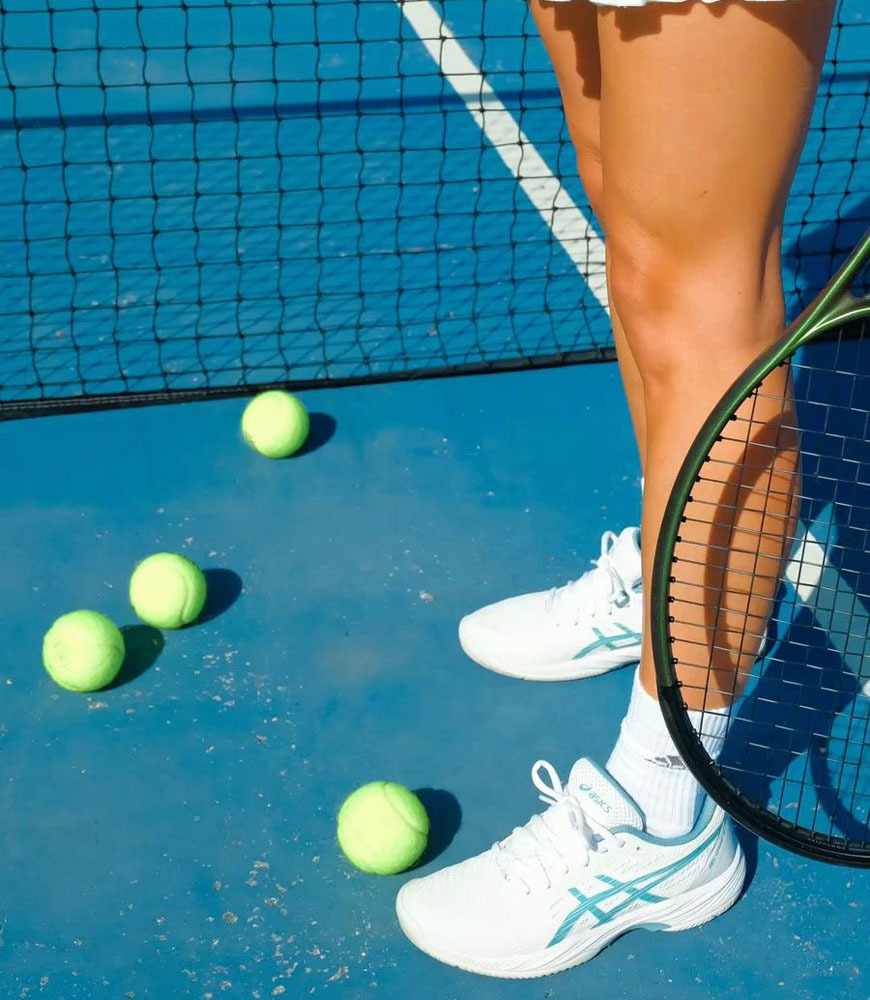

Pickleball vs Tennis: Rules, Equipment, and Court Size Compared
Racquet sports are currently very popular across the UAE. Tennis has always been the classic. It's powerful, it's endurance-heavy, and it's been the go-to for decades. But pickleball? It's come out of nowhere, and it's now one of the fastest-growing sports on the planet.
So if you're a tennis player thinking about picking up a paddle, or you're brand new to both and trying to figure out where to start, the pickleball vs. tennis question is a good place to begin. Both sports will get your heart rate up, both give you those addictive high-energy rallies, and both reward smart strategy. But the way you actually play them? Pretty different.
This guide breaks it all down: court size, gear, rules, scoring, and how the two games actually feel to play. By the end, you'll know exactly what equipment to grab, and you'll be ready to step onto either court without second-guessing yourself.
What Is the Difference Between Pickleball and Tennis?
The difference between pickleball and tennis really comes down to four things: how much space you need, what you're hitting with, how you serve, and how fast the game moves. Tennis needs a big court, a strung racket, a bouncy felt ball, and a hard overhand serve. Pickleball needs way less room, a solid paddle, a plastic ball with holes in it, and an underhand serve.
Pickleball actually borrows a bit from tennis, a bit from badminton, and a bit from table tennis too. But it's got its own rulebook. There's the 7-foot "kitchen" (the no-volley zone), and you've got to let the ball bounce before you can smash it. That's what makes the game feel so quick, so easy to pick up, and so focused on where you place the ball rather than how hard you hit it.
What Are the Differences Between Tennis and Pickleball Courts?
Line up for pickleball court vs. tennis court side by side, and the size difference jumps out immediately. A standard tennis court takes up nearly four times the space of a pickleball court. That extra room is what lets tennis players sprint the baseline and rip those deep, wide shots. Pickleball, on the other hand, keeps everyone packed in closer together, which is exactly why net exchanges feel so fast and reactive.
Pickleball Court Dimensions
- Overall size: 20 feet wide by 44 feet long (6.10 m x 13.41 m), same for singles and doubles.
- The kitchen (non-volley zone): stretches 7 feet (2.13 m) from the net, on both sides, across the full width.
- Net height: 36 inches (91.4 cm) at the sidelines, 34 inches (86.4 cm) in the middle.
- Layout: left and right service courts sit behind the kitchen line, boxed in by baselines and sidelines.
Tennis Court Dimensions
- Overall size: 78 feet long (23.77 m). Width comes in at 27 feet (8.23 m) for singles and 36 feet (10.97 m) for doubles once you add the alleys.
- Service area: split into four boxes, each running 21 feet (6.40 m) from the net to the service line.
- Net height: 42 inches (106.7 cm) at the posts, 36 inches (91.4 cm) in the center.
- Runoff space: you need real room behind the baselines (18 to 21 feet) and along the sidelines (10 to 12 feet) so players can chase down those fast shots without slamming into a fence.
Pickleball Racket vs Tennis Racket
A pickleball racket vs. tennis racket comparison really comes down to materials and how the ball reacts off the face of the racket. A tennis racket works off string tension and a trampoline-like bounce, which is how players generate that heavy topspin and long-distance power. A pickleball paddle skips the strings entirely. It's a solid face over a honeycomb core, built for feel and control rather than raw power.
|
Feature |
Pickleball Paddle |
Tennis Racket |
|
Hitting Surface |
Solid composite/carbon face, no strings |
Open string bed (polyester or nylon) |
|
Core Structure |
Polymer or aluminum honeycomb |
Hollow graphite/composite frame |
|
Typical Weight |
7.0 - 8.5 oz (198g - 241g) |
9.5 - 11.5+ oz (270g - 325g+) |
|
Overall Length |
15.5 - 16.5 in (39.3cm - 41.9cm) |
27–27.5 in (68.6 cm–69.8 cm) |
|
Average Grip Size |
4.0 - 4.25 in (10.1cm - 10.8cm) |
4.125 - 4.5 in (10.5cm - 11.4cm) |
|
Sweet Spot |
Small, sits close to your hand |
Big, spread across a 98-104 sq in head |
Paddle and Racket Design
Pickleball paddles have a smooth or textured face, usually raw carbon fiber, fiberglass, or composite graphite, wrapped around a polymer honeycomb core. "No strings" means the energy goes straight through on contact, which gives you a smaller but very precise sweet spot. Tennis rackets are built differently. They've got a hollow frame around a big string bed, typically 98 to 104 square inches, and that bed flexes when the ball hits it. That flex is where all the power and spin come from, and no solid paddle can really copy it.
Weight and Materials
Tennis rackets usually sit somewhere between 270 and 325 grams unstrung, and that weight is spread out along a long handle. It gives you real momentum on a full swing, but it also puts more strain on your shoulder and elbow over time. Pickleball paddles are lighter, generally 200 to 240 grams. Carbon fiber gives you touch and control. Mid-weight polymer cores land somewhere in between, which a lot of players like for quick hands at the net.
Handle, Grip, and Balance
Tennis handles run about 6.5 to 7 inches with a wider grip, which lets you use classic Eastern, semi-Western, or Western grips and swing a proper two-handed backhand. Pickleball handles are shorter, usually 4.5 to 5.5 inches, with a slimmer grip. Many tennis players moving over to pickleball go for paddles with longer handles, 5.25 inches or more, so their two-handed backhand still feels natural.
How Rules and Scoring Differ Between Pickleball and Tennis
Tennis runs on overhand serves, volleys anywhere behind the net, and the classic 15-30-40 scoring that builds into sets. Pickleball works differently. Serves are underhand, the ball has to bounce twice before rule is strict, and the game is scored to 11 using side-out scoring.anyone can volley, the kitchen
In tennis, a hard serve can win you the point almost instantly, and rushing the net right after is a real tactic. Pickleball was basically designed to stop that from happening. The serve must be underhand and below the waist, and both the serve and return must bounce first. So instead of an ace ending the point in two seconds, you get a proper rally where both sides start on even footing.
How the Playing Styles Differ
Speed and Rally Style
Tennis is all about baseline power, quick footwork, and heavy topspin to push your opponent way back. Recreational and advanced players regularly hit speeds over 120 to 160 km/h.
Pickleball's a different game. It mixes soft, careful shot placement with sudden bursts of power. A lot of action happens right near the net, in quick, reflex-driven exchanges. Winning at pickleball isn't really about muscle. It's about patience, resetting a ball that's popped up too high, dropping soft shots into the kitchen where nobody can attack them, and understanding the angles on the court.
Movement and Court Coverage
Tennis demands long sprints, sliding stops, wide recovery runs, and serious stamina across that big 78-foot court.
Pickleball is more about short shuffle steps, quick side-to-side reflexes, and staying balanced near the kitchen line. It's easier on your joints since you're covering less ground, but don't mistake that for easy.
Singles vs Doubles
Most people play pickleball doubles. It's about syncing up with your partner, closing the net together, and never breaking kitchen discipline. Pickleball singles is a whole different thing, brutal on your cardio since you're covering that 20-foot width all by yourself.
Tennis flips that around. Singles is the standard, the format most people picture when they think of the sport, while doubles brings in the alley lanes and adds net-poaching tactics across a wider 36-foot court.
Conclusion
Ultimately, the difference between pickleball and tennis isn't really about one being better than the other. They complement each other. Tennis gives you raw baseline power, big court coverage, and explosive strokes. Pickleball gives you tactical depth, quick reflex rallies, and a welcoming vibe that works for pretty much any age or fitness level.
Whether you're a tennis player looking to cross-train or you've never picked up a paddle or racket in your life, both sports deliver a serious workout and a lot of fun on court.
Ready to get started? Visit TennisShop.ae and check out our full range of tennis rackets, carbon fiber pickleball paddles, court shoes, and accessories, with speedy delivery across Dubai, Abu Dhabi, and the rest of the UAE.
Frequently Asked Questions
Can a tennis racket be used to play pickleball?
No. Pickleball needs a solid, stringless paddle made from wood, composite, or carbon fiber. A strung tennis racket would just pop the light plastic pickleball ball or damage it.
Can you play pickleball on a tennis court?
Yes. Just tape or draw temporary pickleball lines on it. You can actually fit up to four pickleball courts inside one tennis court, as long as you lower the net to 34 inches at the center.
Do pickleball and tennis use the same ball?
No. Tennis balls are pressurized, hollow, and covered in that fuzzy felt for bounce and grip. Pickleball balls are hard plastic with holes drilled through them, kind of a wiffle ball, built to control how they fly through the air.
Is pickleball scoring the same as tennis?
No. Tennis uses the 15-30-40-game system, which is built into sets. Pickleball uses side-out scoring up to 11 points, winning by two, where only the serving side can score, and players call out a three-number sequence before every serve in doubles.
From Our Blog

Iga Swiatek ranking, stats, titles and records

Laver Cup 2026 Format and Schedule at The O2 London

2026 China Open tennis tournament dates, players, and history

How Coco Gauff rose to the top of women's tennis

Pickleball vs Tennis: What's the Difference Between the Two Sports
Pickleball Rules Guide For Beginners
Pickleball court dimensions and size guide

Who Has Won the Most Grand Slam Titles in Tennis?
Tennis Strings Guide: Everything You Need to Know
Tennis Scoring: System, Points, Games, Sets & Tie-Break
How to Improve Tennis Backhand Like a Pro: Tips & Technique

Cincinnati Open Tennis: Schedule, History & Guide

Alexander Zverev Career, Titles, Stats & Records

Who Is Novak Djokovic? Career Timeline, Titles, Stats & Records

Jannik Sinner 2026: Rankings, Stats & Latest News

Carlos Alcaraz 2026: Ranking, Records & Grand Slam Outlook

US Open 2026: Schedule, Players, Venue, Scoring & Rules

Wimbledon 2026 Guide: Schedule, Players, & Rules

Serena Williams Wimbledon 2026 Comeback: Latest Update

Roland Garros 2026: French Open Overview & Predictions

Italian Open 2026: Overview, Predictions and Legacy

How to Become a Professional Tennis Player

Tennis Miami Open 2026: Overview, Winners, History & Facts

7 Steps to Master a Tennis Serve (Beginner’s Guide)

7 Tips to Choose the Best Padel Shoes | Complete Guide
Pickle Ball vs Padel: What’s the Difference in Rules and Play?

Dubai Duty Free Tennis Championships 2026: Complete Guide

Tennis Elbow Exercises & Prevention: Complete Player Guide

Guide to Mubadala Abu Dhabi Open 2026: Tickets & Info

Top Tennis Warm Up Exercises to Boost Performance

Six Kings Slam 2025: Sinner’s Win & Riyadh’s Tennis Rise

Australian Open 2026: Everything You Need to Know

Top Longest Tennis Matches Ever Played in History

Top 10 Tips for Playing Padel Like a Pro | TennisShop.ae

Roger Federer Net Worth in 2025: The Billionaire of Tennis

ATP Champions: Top 10 ATP Legends Who Ruled the Tour

Laver Cup vs Davis Cup – Everything You Need to Know