
How to Choose the Right Tennis Racket: A Complete Guide
Choosing the right racket for a perfect and winning game is a difficult task. Maybe you are a new player, trying your hands-on tennis, or maybe you are an experienced player, trying to upgrade your tennis skills and tennis racket, then you can understand how daunting the situation is. But worry not - we at TennisShop.ae, are here to guide you on the journey of buying a perfect tennis racket no matter what your playing style or experience is. This guide will cover everything.
Quick Summary: Choosing the Right Tennis Racket
When it comes to how to choose a tennis racket, the right decision can make all the difference in your performance, comfort, and injury prevention. Every player’s needs are unique. Factors like head size, weight, balance, and grip all influence how the racket feels in your hand and how it performs on the court.
A good tennis racket buying guide starts with the basics: racket head size affects your power and control. At the same time, the weight and balance determine how easy it is to swing. The racket size chart helps you match the frame to your age and skill level. At the same time, understanding how to choose racket grip size ensures better comfort and fewer strain-related injuries.
Tennis Racket Basics: Understanding the Parts
Frame:
The frame is the racket’s main structure, influencing weight, stiffness, and power while choosing tennis racket. A lighter frame offers maneuverability, while a heavier one adds stability.
Head:
The head is the stringed area where the ball makes contact. Larger heads provide a bigger sweet spot. On the other hand, smaller heads give advanced players more control.
Throat:
The throat connects the head to the handle, affecting racket flexibility and vibration dampening.
Handle:
Where you grip the racket, choosing the right handle is crucial for comfort and control.
Butt Cap:
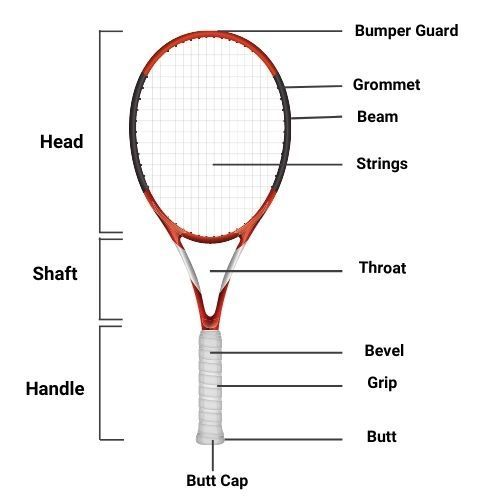
Located at the base of the handle, the butt cap helps maintain grip security and houses brand details.
Knowing these parts is the first step in choosing the right tennis racket for your game.
Core Factors in Choosing a Tennis Racket
Selecting the right racket depends on balancing multiple factors to suit your style, skill, and comfort. This tennis racket buying guide covers the essentials.
Weight – Light vs Heavy
|
Type |
Pros |
Cons |
Best for |
|
Light (260–290g) |
Easy to maneuver, faster swings |
Less stability, lower power |
Beginners, juniors |
|
Heavy (300g+) |
More power, stable on impact |
Requires strength, slower swings |
Advanced players |
Head Size – Midsize, Midplus, Oversize
|
Size |
Power |
Control |
Player Level |
|
Midsize (<95 sq in) |
Low |
High |
Advanced |
|
Midplus (95–105 sq in) |
Balanced |
Balanced |
Intermediate |
|
Oversize (>105 sq in) |
High |
Less control |
Beginners |
Balance – Head-Heavy, Head-Light, Even
Head-heavy adds power; head-light offers control and maneuverability; even balance blends both.
Length – Standard vs Extended
Standard (27") is most common; extended (>27") gives more reach and power.
Beam Width – Power vs Control
Thicker beams generate more power; thinner beams offer better feel and control.
Grip Size
Refer to a racket size chart to choose the right grip for comfort and injury prevention.
Swingweight
Higher swingweight delivers more power but requires strength; lower swingweight improves maneuverability.
Which Tennis Racket Should You Use Based on Skill Level?
Rackets for Beginners
If you’re new to the game, the best tennis racket for beginners is one that offers a larger head size (100–110 sq in) for a bigger sweet spot and more forgiveness. Lightweight frames also make learning easier, reducing arm fatigue during practice.
Rackets for Intermediate Players
Intermediate players benefit from rackets that balance power and control. A mid-plus head size with a slightly heavier frame can help refine strokes while maintaining maneuverability.
Rackets for Advanced Players
Advanced players usually prefer smaller head sizes (95–98 sq in) for precision and control. Heavier frames offer stability, enabling faster swing speeds and sharper shot placement.
Kids/Junior Racket Selection Guide
Use a racket size chart to match the length to your child’s height and age. Lighter frames with smaller grips ensure comfort and correct technique development.
What String Pattern Should You Choose?
Open vs Closed String Pattern
An open string pattern offers more spin and power but may wear out faster, while a closed pattern provides better control and durability.
How String Tension Affects Spin & Power
Lower tension gives you more power and a softer feel, while higher tension delivers more control and precision.
Ideal Strings for Different Skill Levels
Beginners often benefit from softer, multifilament strings for comfort, while advanced players may prefer polyester strings for control and spin. Choose based on your playing style and frequency.
Grip Size of Tennis Rackets
Why Grip Size Matters
When learning how to choose the right tennis racket, grip size is one of the most overlooked yet crucial factors. The correct grip size ensures comfort, control, and injury prevention. A grip that’s too small can strain your wrist and forearm, while one that’s too large reduces maneuverability and shot precision. You can use a racket size chart or measure the distance from the middle crease of your palm to the tip of your ring finger to find the perfect fit.
Explore Our Tennis Grips – Upgrade your game with premium grips designed for performance and comfort.
Common Mistakes When Buying a Tennis Racket and How to Avoid Them
When learning how to choose a tennis racket, many players make avoidable errors. Picking a racket that’s too heavy can strain your arm, while one that’s too light may lack stability and power. Always refer to a tennis racket size guide to match your skill level and strength.
Another common oversight is ignoring grip size as per the tennis racket guide. Using the wrong size can lead to discomfort or even injury, so consult a racket size chart before buying. Lastly, avoid overprioritizing brand names; instead, focus on the specifications that fit your game. The right balance ensures optimal performance and comfort when you want to know how to choose a racket.
Expert Tips: How to Test a Racket Before You Buy
-
Ask for a demo – Many stores have trial rackets so you can experience the feel before committing.
-
Check control, comfort, and response – Test how the racket handles baseline shots, volleys, and serves.
-
Assess grip size – Use a racket size chart or measure to ensure the grip fits comfortably.
-
Test swing weight – See if it feels too heavy or light for your playing style.
-
Online buyers – Refer to a tennis racket size guide and read reviews from players with similar skill levels.
Top Recommended Rackets by TennisShop.ae
(Space for Products)
FAQs
1. What’s the difference between power and control rackets?
Power rackets have larger heads and lighter frames, giving more force with less effort. Control rackets are heavier with smaller heads, offering precision for advanced players.
2. What is the difference between head-heavy and head-light tennis rackets?
Head-heavy rackets provide more power and stability, especially for baseline play. Head-light rackets are easier to maneuver, making them better for volleys and quick reactions.
3. How do I know what grip size I need?
Measure from your ring finger tip to the second palm crease, or use a racket grip size chart. The right grip should feel secure without excessive squeezing.
4. How does string pattern affect my game?
An open string pattern gives more spin and power but wears out faster. A dense string pattern offers control and durability, with less spin potential.
From Our Blog

Shanghai Masters 2026: Seeds, Start Date & Where to Watch

Paris Masters Tennis Guide: Schedule, Points & Payouts

Who Is Elena Rybakina? Rankings, Titles & Career Stats

Naomi Osaka: Grand Slam Titles, Ranking & Career Stats

Aryna Sabalenka: Career, Timeline, Stats & Playiing Style

Mirra Andreeva: Career, Ranking, Stats & Playing Style

Iga Swiatek ranking, stats, titles and records

Laver Cup 2026 Format and Schedule at The O2 London

2026 China Open tennis tournament dates, players, and history

How Coco Gauff rose to the top of women's tennis

Pickleball vs Tennis: What's the Difference Between the Two Sports
Pickleball Rules Guide For Beginners

Pickleball court dimensions and size guide

Who Has Won the Most Grand Slam Titles in Tennis?

Tennis Strings Guide: Everything You Need to Know
Tennis Scoring: System, Points, Games, Sets & Tie-Break

How to Improve Tennis Backhand Like a Pro: Tips & Technique

Cincinnati Open Tennis: Schedule, History & Guide

Alexander Zverev Career, Titles, Stats & Records

Who Is Novak Djokovic? Career Timeline, Titles, Stats & Records

Jannik Sinner 2026: Rankings, Stats & Latest News

US Open 2026: Schedule, Players, Venue, Scoring & Rules

Wimbledon 2026 Guide: Schedule, Players, & Rules

Serena Williams Wimbledon 2026 Comeback: Latest Update

Roland Garros 2026: French Open Overview & Predictions

Italian Open 2026: Overview, Predictions and Legacy

How to Become a Professional Tennis Player

Tennis Miami Open 2026: Overview, Winners, History & Facts

7 Steps to Master a Tennis Serve (Beginner’s Guide)

7 Tips to Choose the Best Padel Shoes | Complete Guide

Pickle Ball vs Padel: What’s the Difference in Rules and Play?

Dubai Duty Free Tennis Championships 2026: Complete Guide

Tennis Elbow Exercises & Prevention: Complete Player Guide

Guide to Mubadala Abu Dhabi Open 2026: Tickets & Info

Top Tennis Warm Up Exercises to Boost Performance

Six Kings Slam 2025: Sinner’s Win & Riyadh’s Tennis Rise

Australian Open 2026: Everything You Need to Know